

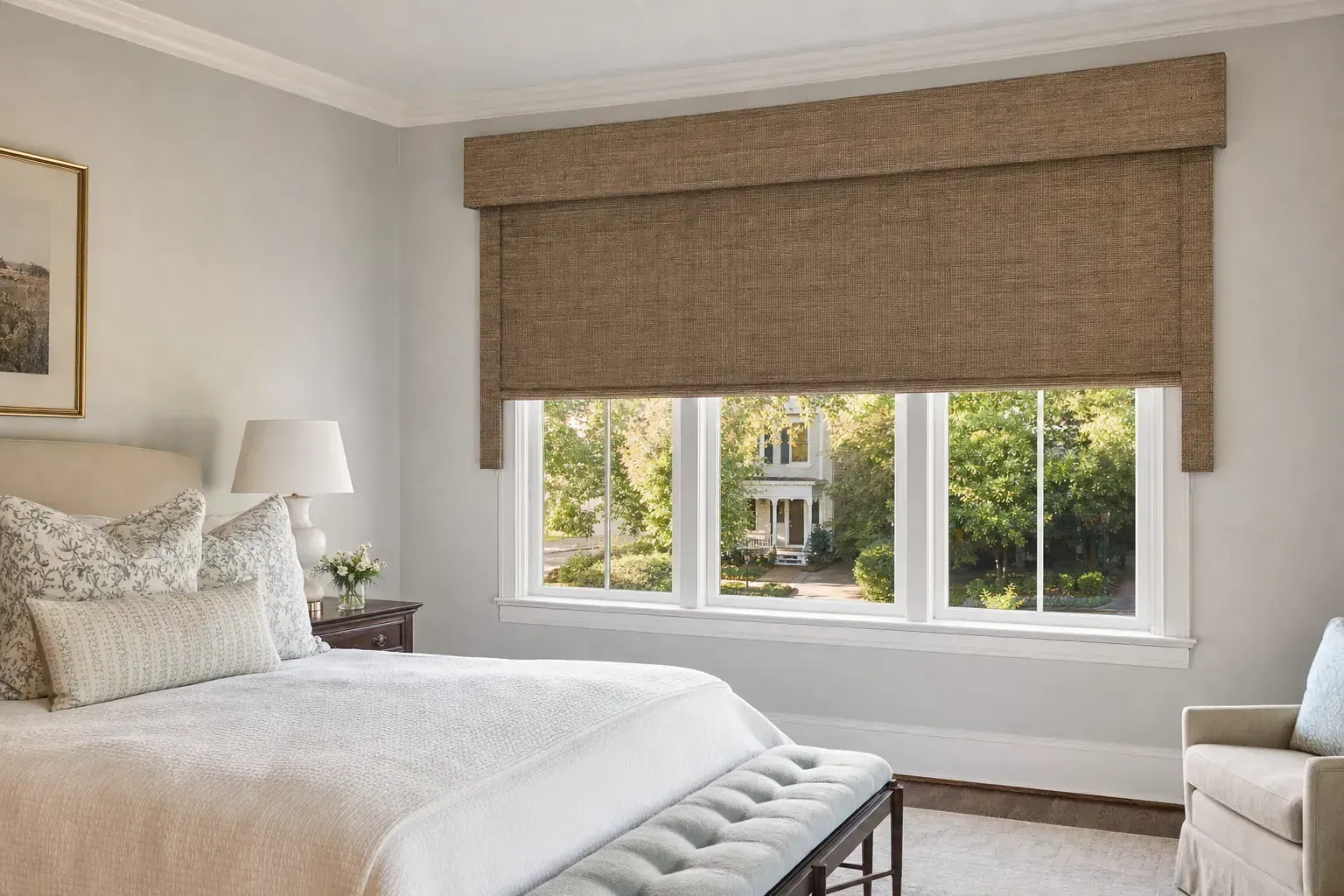

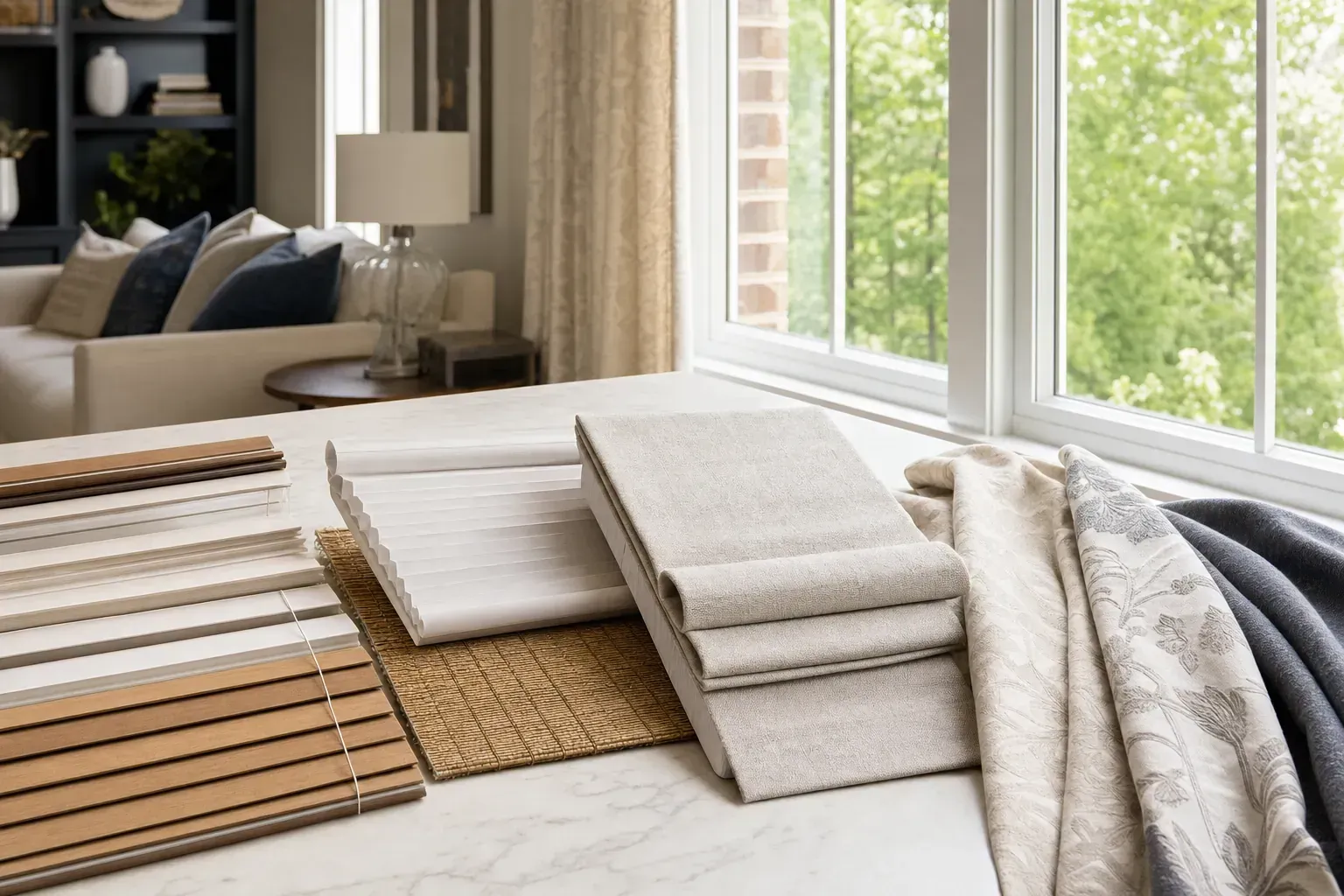
Custom is about proportion The fabric matters, but the proportion matters just as much. Height, fullness, pleat, lining, and hardware all shape the final room. Choose lining by function Blackout lining supports sleep and media rooms. Privacy lining softens exposure. Interlining adds body when the room needs more presence. Layer with purpose Sheers, shades, and drapery can work together when each layer has a job. The result should feel collected, not heavy. Fabric in the room beats fabric online A swatch changes in real light. Seeing material beside wall colour, flooring, and furniture prevents expensive surprises.
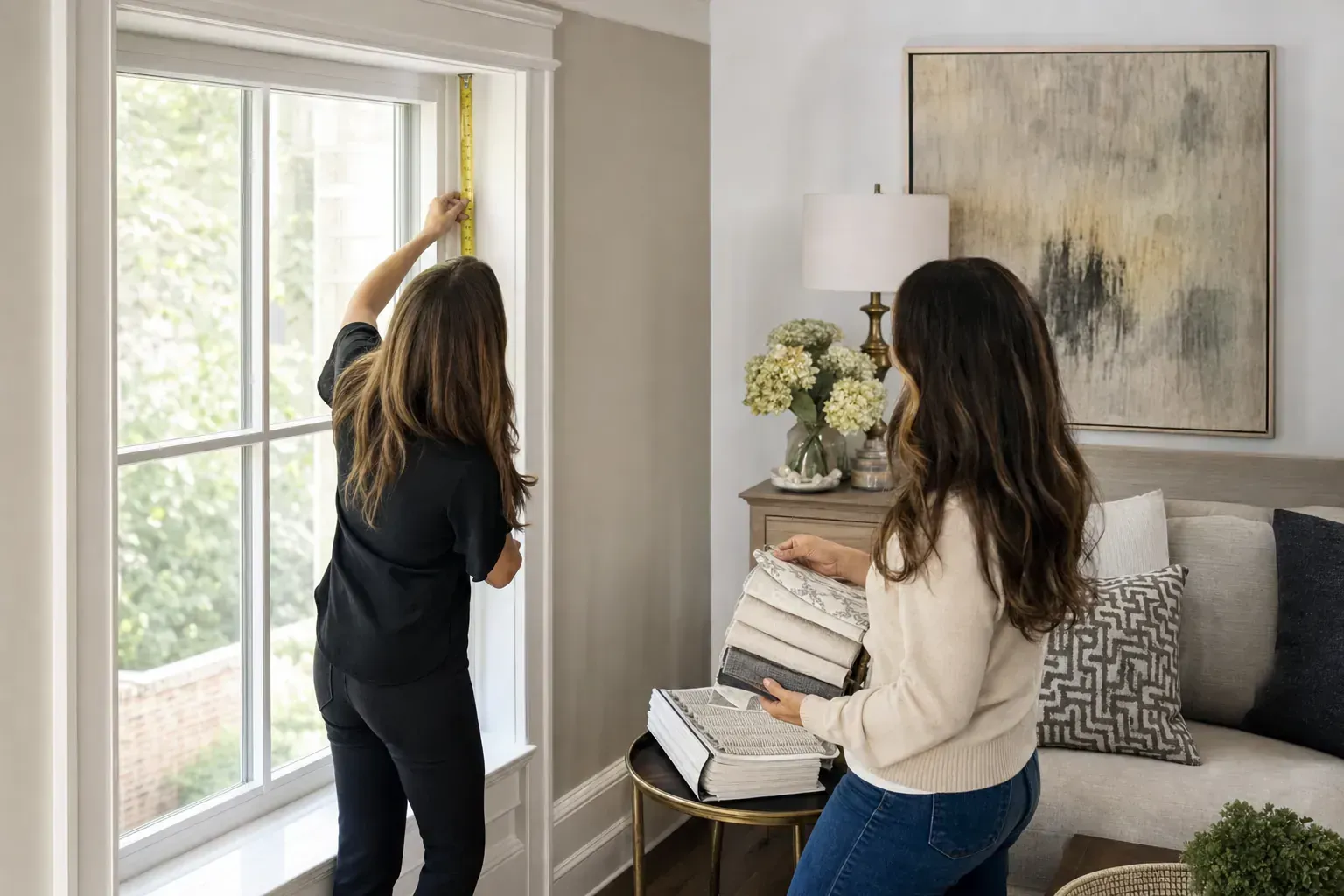
The best window treatment is not the one that looks good in a small sample. It is the one that makes a particular room easier to live in, whether that means cutting afternoon glare, sleeping in a darker bedroom, keeping a street-facing room private, or letting a beautiful view stay part of the space. Atlanta homes put different demands on their windows. A west-facing kitchen can get punishing late-day sun. A Midtown condo may need privacy without losing the skyline. A Buckhead living room may need more softness and scale. The right answer starts with the room and its daily use, then narrows to the materials and controls that will actually work. Start with what the room needs to do Before choosing a product, look at the light, the view, the privacy concern, and how often the window needs to change throughout the day. A treatment that is perfect for a bedroom may make a kitchen feel too closed in. A sheer that looks beautiful in daylight may not give enough privacy when the lights come on at night. Sun and glare: Is the room uncomfortable in the afternoon or hard to use around screens? Privacy: Is the issue daytime visibility, nighttime exposure, or both? Comfort: Does the room feel hot in summer, drafty in winter, or bright too early in the morning? Operation: Will the treatment be adjusted every day, or does the window need a simple set-and-forget approach? Architecture: Does the room need a crisp, minimal line or a more layered, finished look? Blinds are best when you want to tune the light Wood, faux wood, aluminum, and woven wood blinds work well when active control matters. Their slats can redirect daylight and soften a direct sightline without closing the room completely. That flexibility is useful in offices, breakfast rooms, kitchens, and front rooms where the light changes through the day. Blinds are also a strong choice when the window has trim or depth that suits a clean inside mount. But they are not a sealed privacy solution. The slats and side edges leave small openings, so a street-facing bedroom or bath may need fuller coverage than a blind alone can provide. For rooms where adjustable light matters most, Lionheart can help compare custom blind options against the actual trim, depth, and view instead of relying on a showroom display. Roller and solar shades make hard Atlanta sun easier to live with Roller and solar shades are often the cleanest answer for wide glass, high-rise rooms, home offices, and spaces that take strong afternoon sun. They create a simple, continuous plane over the window, which can soften glare without adding visual weight. The fabric makes the difference. A more open solar weave can preserve more of the view and daylight, while a tighter or more opaque material gives more screening and privacy. The U.S. Department of Energy's window-treatment research shows why both the fabric and the way it is used matter for solar control. For a room that needs reliable nighttime privacy, plan a second layer or a more opaque shade rather than expecting a view-preserving solar fabric to do both jobs. See how roller shades can be planned for Atlanta homes when glare, views, privacy, and large windows need to work together. Cellular shades are worth a closer look around exposed glass Cellular shades use a honeycomb structure that traps air near the window. They are a practical option for bedrooms, nurseries, sun-facing rooms, and areas that feel less comfortable near the glass. Their soft, simple profile can make a room feel calmer than horizontal slats while still providing useful light control. The Department of Energy notes that well-fitted cellular shades can help reduce unwanted heat gain and improve comfort near windows. That does not mean every cellular shade performs the same way. Fit, side gaps, fabric opacity, and the routine for raising and lowering the shade still shape the real result. Drapery finishes the room and solves problems shades cannot Custom drapery brings softness, scale, and a more complete architectural finish. It is especially useful when a living room needs warmth, a bedroom needs stronger darkness, or a large wall of glass feels visually flat with a single shade alone. Drapery can stand on its own or layer over blinds and shades. A solar shade can handle everyday glare while lined panels add privacy after dark. A cellular shade can help with comfort while drapery closes the remaining light gaps in a bedroom. The goal is not to add layers for decoration. It is to give each layer one job it can do well. For fabric, lining, fullness, and hardware planned as one decision, explore custom drapes for Atlanta homes. Large, tall, and hard-to-reach windows need a practical plan Big windows make the wrong choice more obvious. A treatment can look elegant while raised but become awkward if it is hard to reach, does not stack cleanly, or leaves a room exposed at night. This is where the width of the glass, the mounting space, and daily operation matter as much as the fabric. Motorized shades are useful when the treatment is high, wide, or adjusted on the same schedule every day. They can help manage glare before it hits a screen, close a bedroom before bedtime, or make a bank of windows feel easy instead of fussy. Lionheart can plan motorized shades and controls around the room rather than adding automation after the design is already set. Choose the treatment by room Living room: Start with the view and the mood. Solar shades, woven shades, or drapery can preserve daylight while keeping the room comfortable and finished. Bedroom: Prioritize privacy and darkness. Room-darkening or blackout shades, cellular shades with the right fabric, and lined drapery are stronger choices than slats alone. Kitchen: Choose easy, durable control. Blinds can redirect light around work surfaces, while roller shades can feel cleaner on a large window or door. Home office: Make screen glare the first test. Solar or roller shades are often effective because they soften direct sun without turning the room into a cave. High-rise or view room: Preserve the view during the day, then plan true nighttime privacy separately. A daytime solar shade paired with a second layer is often more successful than a single compromise treatment. Measure before falling in love with a finish Window depth, trim, handles, sill shape, nearby furniture, and door swing all affect the final result. An inside mount may be the right clean detail on one window, while an outside mount gives better coverage on another. These small choices determine whether a treatment feels tailored or like it was added after the fact. An in-home consultation makes the decision easier because samples can be seen in the actual light, the windows can be measured properly, and the practical details can be solved before anything is ordered.
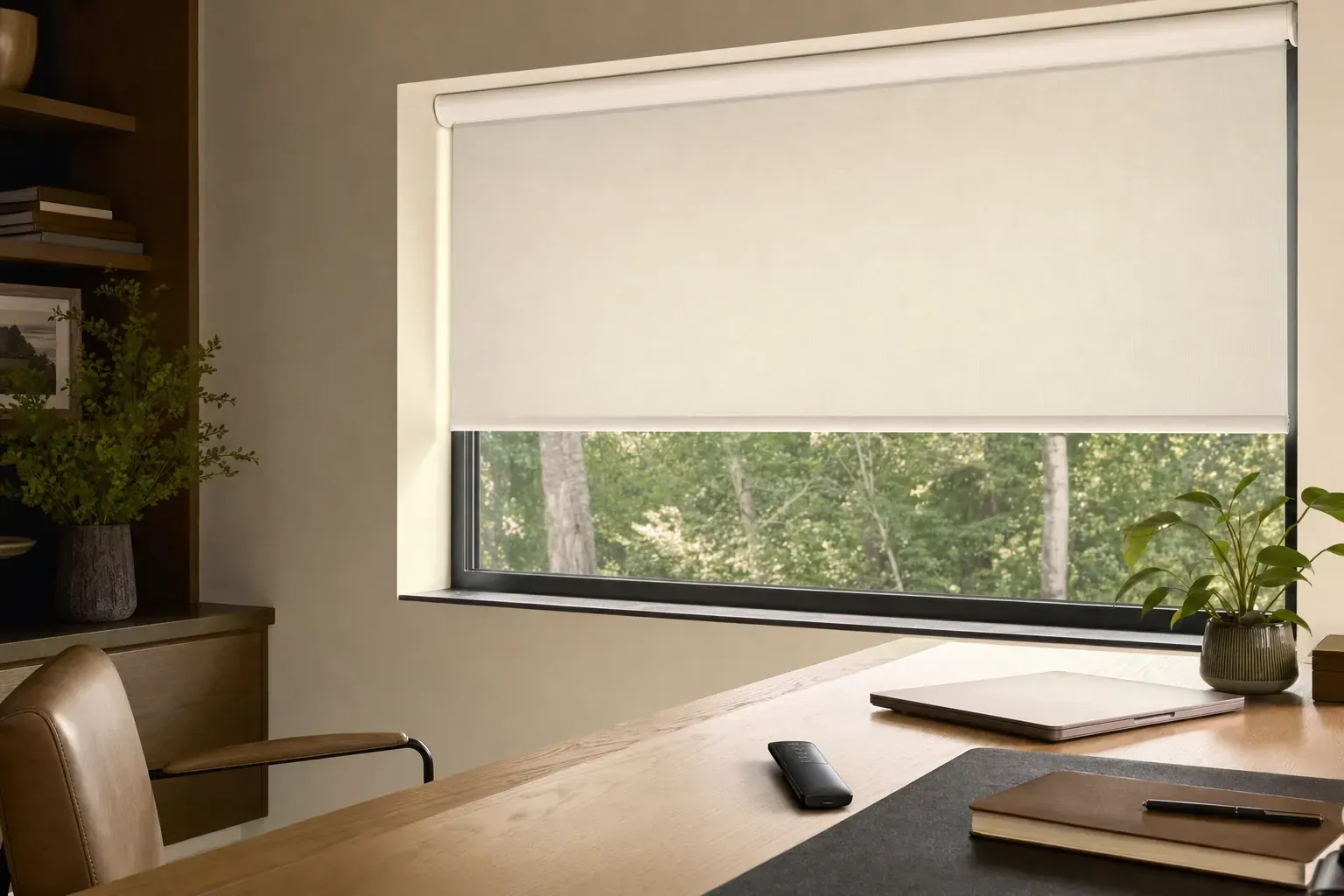
A blind that already fits the room well can be a tempting candidate for motorization. The practical question is not whether a motor exists for it. It is whether the existing shade, blind, hardware, and window can become easier to use without creating a compromise you will notice every day. For some roller shades and cellular shades, a retrofit can be a smart way to add reliable control. For other treatments, the cleaner answer is to replace the whole unit with a system designed around the fabric, lift mechanism, power source, and controls from the start. This guide helps you tell the difference before spending money on a shortcut that does not suit the window. First, identify what you actually have Start with the treatment, not the remote. A roller shade has a fabric panel that wraps around a tube. Some cellular shades use a compatible headrail and lift system. Those are often the most realistic candidates for motorization because the movement can be driven from inside the existing hardware or through a purpose-built retrofit solution. Traditional horizontal blinds are more complicated. They need a system that can both raise the blind and tilt the slats, while the cords, ladders, and headrail have to remain smooth and balanced. A small accessory may automate one motion without improving the other. Heavy wood blinds, wide spans, and older cord mechanisms are especially likely to reveal the limits of a retrofit. Take a clear look at the condition before going further. Does the blind raise evenly? Does the shade fabric still sit straight? Do the brackets feel solid? Are the cords, chains, or lift mechanisms already noisy or stiff? Motorization adds convenience, but it does not fix an aging treatment. When the underlying system is tired, replacing it can be less frustrating and more polished in the long run. When a retrofit is a good fit A retrofit is worth considering when the existing treatment still looks right in the room and works smoothly by hand. That often includes a newer roller shade with a sound tube and brackets, a cellular shade in good condition, or a set of shades that were installed well but are difficult to reach or tedious to operate every afternoon. It is particularly useful when the problem is access. A tall stairwell window, a bank of shades behind furniture, or a room with a predictable glare routine can benefit from simple controls. The goal is not to make every blind into a gadget. The goal is to make a treatment move when it needs to move, so the room stays comfortable and usable. Good condition: The fabric, slats, lift mechanism, and brackets already operate cleanly. Compatible geometry: The tube, headrail, or chain drive can accept a suitable motor system. Real daily benefit: The window is tall, hard to reach, or adjusted often enough that manual operation becomes a nuisance. Clean power path: A battery, plug-in lead, or planned electrical route will not look improvised in the finished room. Motorized shading can also make scheduled light control more realistic. The U.S. Department of Energy's window-treatment research notes that power options, controls, and scheduled shade use all affect how an automated shading system works in practice. For a homeowner, that means the useful feature is simple: the shade is down when glare or heat is most annoying, then out of the way when you want the view back. Measure compatibility before choosing a motor Compatibility is the part that gets skipped when a retrofit is treated like a quick online purchase. For a roller shade, the tube diameter, tube material, fabric weight, bracket shape, overall width, and bottom bar all matter. A motor needs to fit inside the tube, turn it without strain, and leave the shade level as it travels. For a blind or cellular shade, the headrail, lift method, and weight determine what can be motorized and how tidy the result will be. Do not assume that two treatments that look similar from the room side have the same internal parts. A system that fits one model may be a poor match for another, even when the windows are the same size. Measure the opening and the treatment itself. Note the width, height, depth, mount type, distance to trim, and anything that could interfere with movement. Check whether a handle, crank, nearby cabinet, or drapery panel changes the clearance. For a shade that needs to lift fully, confirm that the roll or stack has somewhere to go without blocking the glass or crowding the trim.
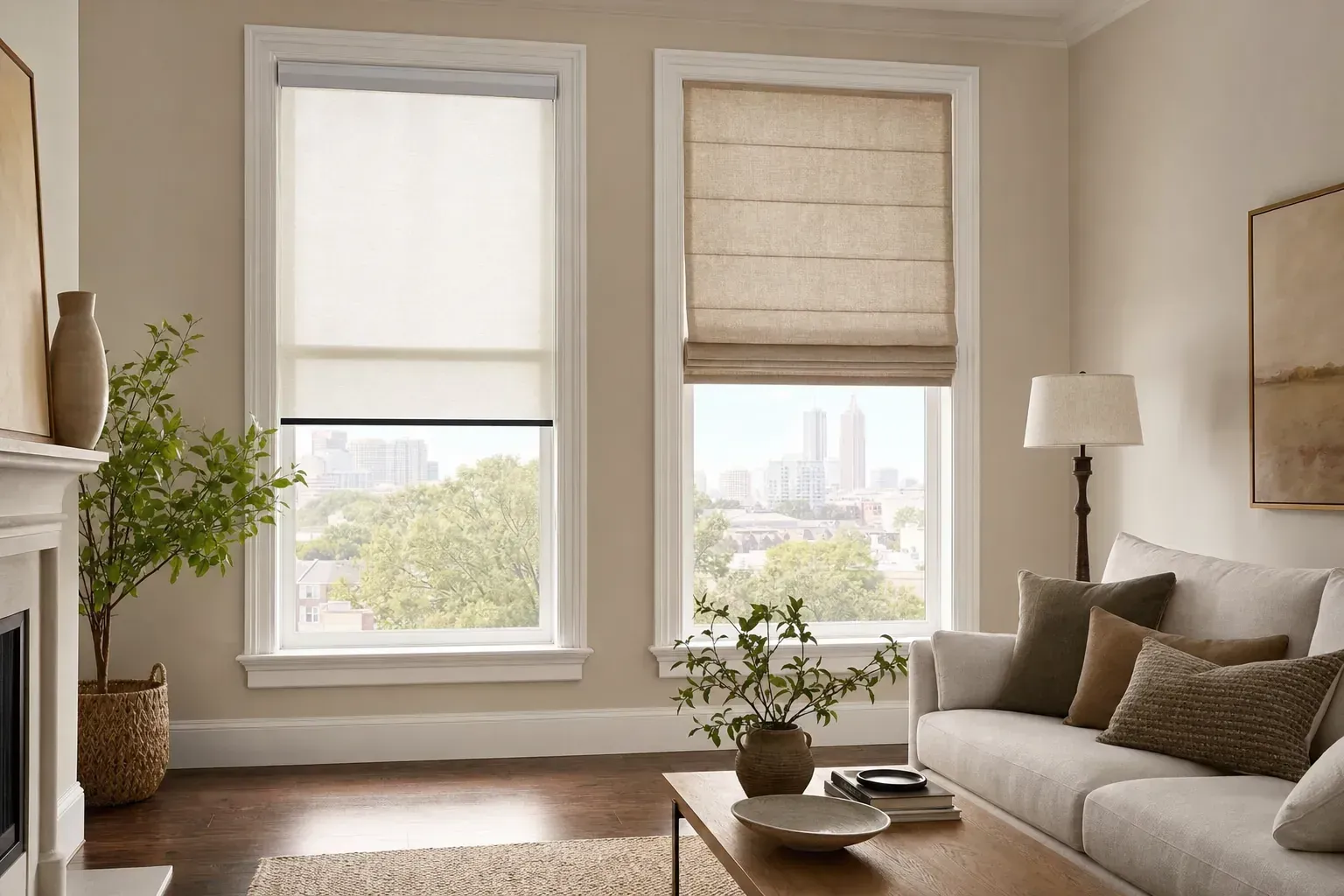
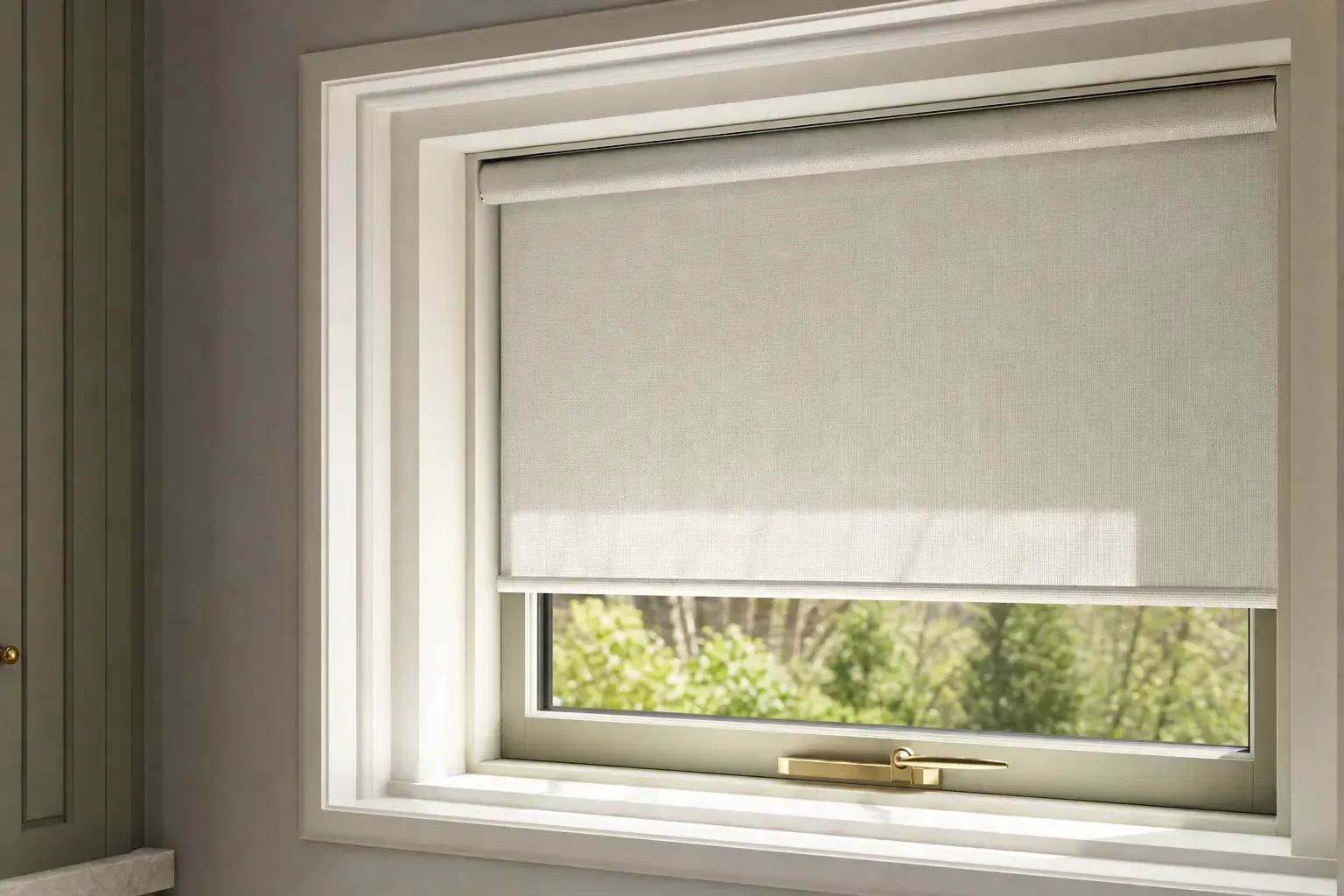
Roller shades and Roman shades can both make a window feel finished, but they solve the room in different ways. Roller shades create a clean, continuous plane for glare control and privacy. Roman shades bring fabric, folds, and visual softness. The right choice starts with the job the window has to do every day, then works back toward the look you want. That distinction matters more than a color swatch. A bright home office may need a flat shade that settles screen glare without making the room feel closed in. A bedroom may need a lined fabric treatment that feels calm at night and adds warmth in the morning. A formal dining room may need the texture and proportions of a Roman shade. A sun-facing condo wall may need the quiet simplicity of several aligned roller shades. Start with function, then let the material and style support it. The short answer Choose roller shades when you want a streamlined look, continuous coverage across the glass, easy everyday operation, or a practical answer for glare, large windows, and modern rooms. Roller shades are especially useful when the treatment needs to disappear when raised and work hard when lowered. Choose Roman shades when the room needs softness, fabric texture, a more decorative statement, or a treatment that relates closely to upholstery, drapery, and other textiles. Roman shades can still be practical, but their strongest advantage is the way they make a window feel intentionally dressed rather than simply covered. Neither is universally better. The better question is whether the room needs the clean utility of a shade surface or the tailored character of fabric folds. The sections below make that choice more concrete, room by room, before a sample is ordered or a measurement is taken in your own home. What roller shades do best Roller shades are built around a simple idea: a single panel of fabric rolls neatly above the window when it is open and lowers into a flat surface when the room needs coverage. That clean movement makes them one of the most flexible choices for windows that are used often. There is little visual bulk, so a roller shade can sit quietly inside deep trim or extend beyond the opening when the room needs more edge coverage. Fabric is what gives a roller shade its personality. A solar fabric can soften glare while keeping a sense of the view. A light-filtering fabric can diffuse hard daylight in a kitchen, office, or living room. A room-darkening fabric can work well in a bedroom when the mount and side coverage are planned honestly. The roller shade material overview from Hunter Douglas is helpful for seeing how broad the fabric choices can be, but the right openness, color, and lining still depend on the room. Roller shades are often the most sensible answer when a window needs daily adjustments. They work well on wide windows, floor-to-ceiling glass, and groups of matching openings because several shades can align cleanly. They are also relatively easy to keep clean: the flat surface gives dust fewer places to settle, and there are no fabric folds to manage.
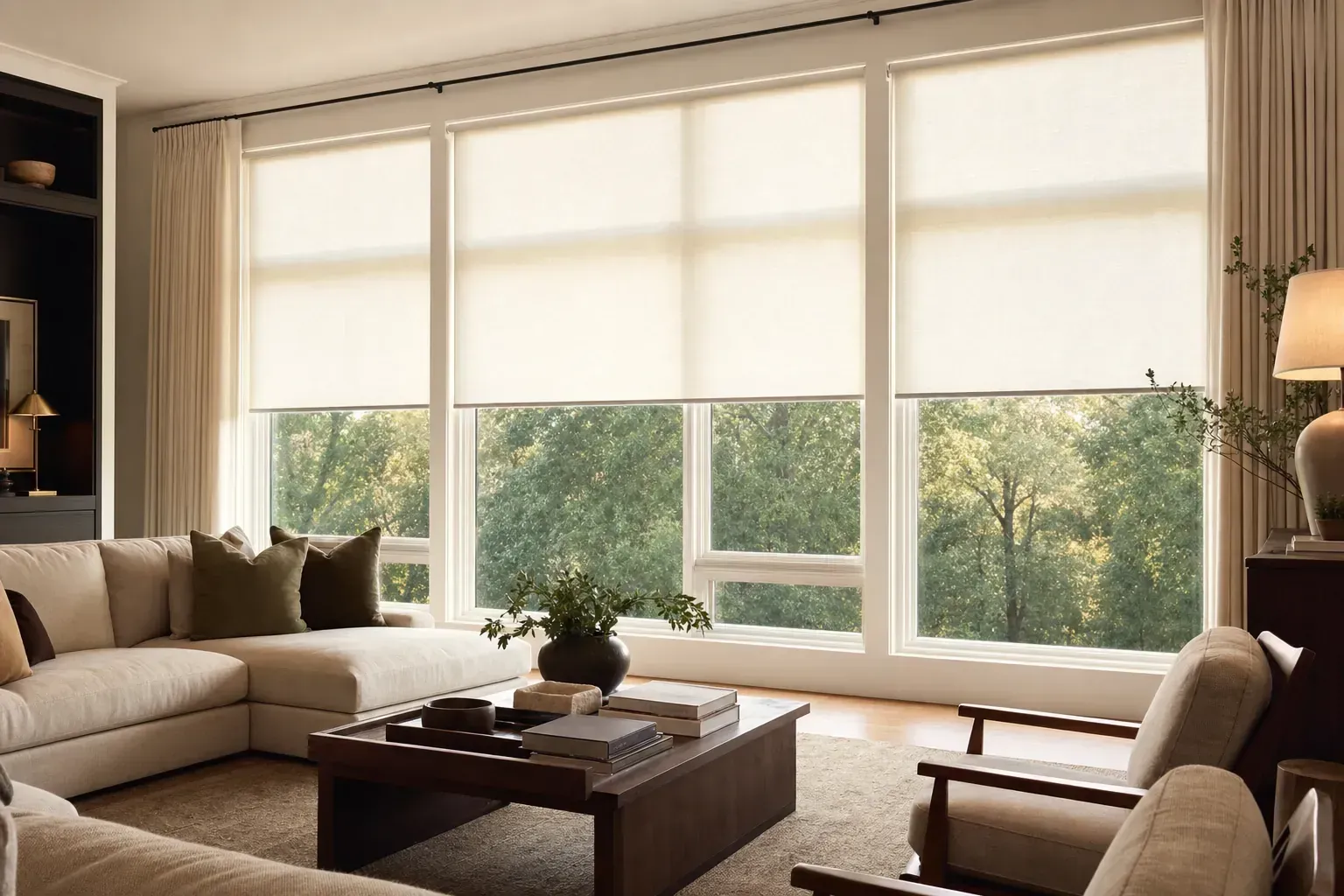
Large windows make a room memorable, but they ask more of a window treatment. The same glass that brings in a view and beautiful daylight can bring glare, heat, nighttime exposure, and a daily adjustment that becomes tiresome when the span is wide or tall. The best answer is not automatically the most dramatic fabric or the most technical shade. Start with what the window needs to do when the room is at its hardest to use. A dining room may need to soften late sun. A bedroom may need real darkness. A high-rise living room may need to keep its skyline while limiting daytime glare and closing down comfortably at night. Once that job is clear, the right treatment becomes much easier to choose. Start with the job of the glass Large windows usually have more than one job. They are part of the room's architecture, a source of light, and sometimes the best feature in the home. Treating them as a standard opening is where many choices go wrong. A product that looks fine on a small sample window can feel visually busy, difficult to operate, or too exposed across a broad wall of glass. Walk through the room at the times it is actually used. Look at where the sun lands, what reflects on a television or screen, and whether a neighboring building can see in once lamps are on. Check how close furniture sits to the glass and whether the treatment needs to clear doors, handles, or deep trim. This creates a more useful brief than choosing by product name alone. View: Is keeping the connection outside part of the reason you love the room? Glare: Does direct light make a screen, dining table, or seating area difficult to use? Heat: Does the space feel uncomfortable beside the glass during the hottest part of the day? Privacy: What will the window need to do after sunset, when the inside is brighter than outdoors? Operation: Will you want to adjust one shade, several treatments, or an entire wall of glass every day? That last question matters more than it seems. The U.S. Department of Energy's window attachment research emphasizes that performance depends not just on the type of covering, but also on how it fits and how people operate it. The right treatment is one you will use when the room needs it. Best for a clean view: roller and solar shades For wide picture windows, tall glass, and rooms where the view is central, roller and solar shades are often the best starting point. They keep the treatment visually quiet because the fabric sits in one clean plane. When raised, they disappear more completely than many slatted options. When lowered, they diffuse the light without breaking the view into horizontal lines. Fabric selection does the real work. A solar fabric can cut glare while retaining a sense of the outdoors, which is useful in a living room, home office, or high-rise room with floor-to-ceiling glass. A more open weave keeps more view but may offer less daytime screening and very little privacy after dark. A tighter weave or room-darkening roller shade offers more protection, though it changes the daylight and view. Lionheart's shade options are selected around that balance rather than a universal openness percentage. For exceptionally wide windows, several matching roller shades are often more practical than one oversized treatment. The goal is to keep the sightlines, bottom bars, and fabric alignment feeling intentional while making each shade easy to service and operate. Lionheart's roller shade guidance is a good next step when the room needs clean glare control without losing its calm, tailored look.
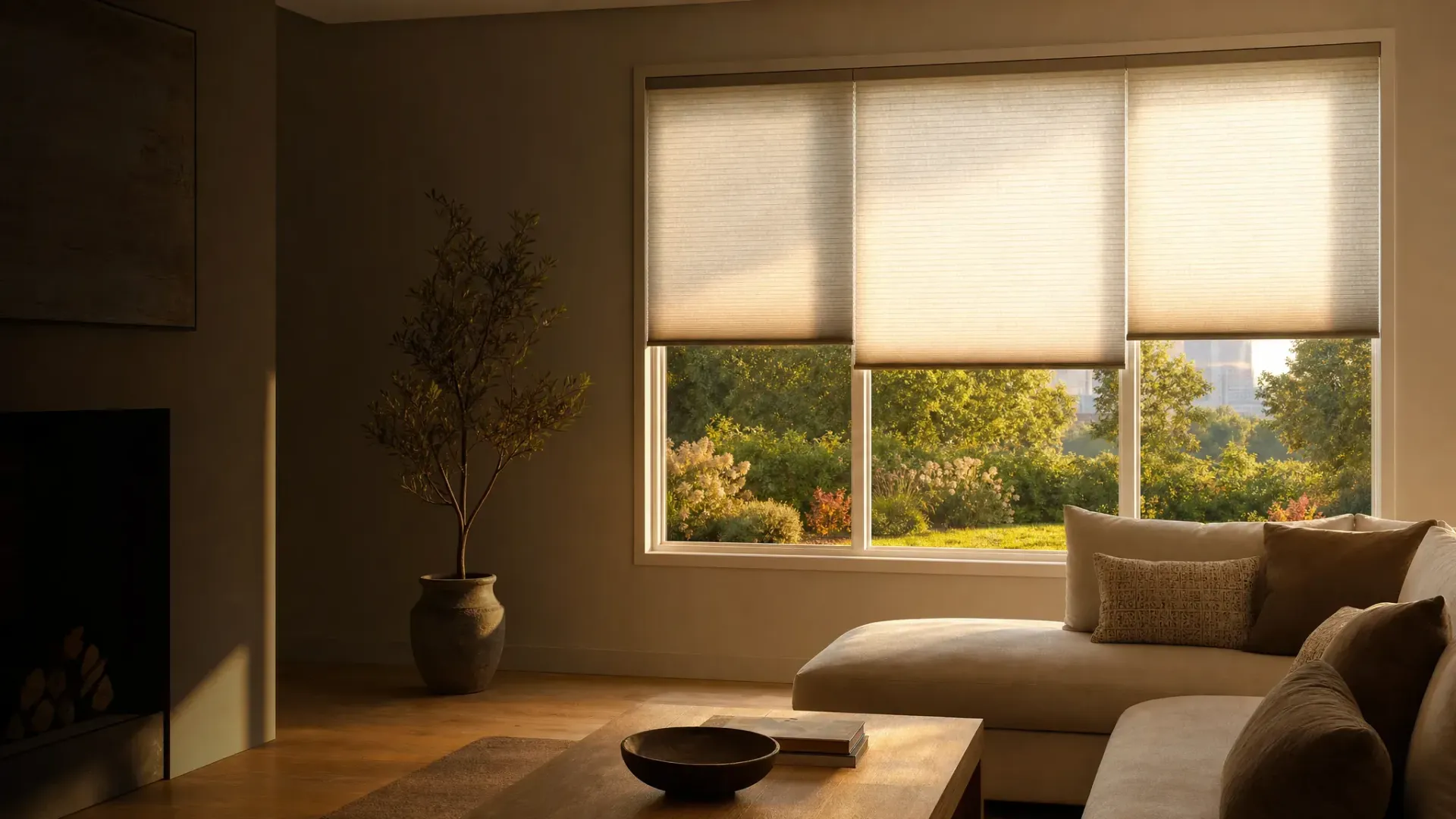
A west-facing window can be lovely in the morning and punishing by late afternoon. When the sun drops lower, light comes in at eye level, screens become hard to read, and a room that felt comfortable at lunch can suddenly feel hot and exposed. The best blinds for west-facing windows are not one universal product. The right treatment depends on whether you want to preserve a view, soften glare, make a bedroom darker, protect a room from intense sunlight, or simply make a daily routine easier. Start with the job the window needs to do at the hardest hour of the day, then choose the fabric, fit, and control around that. Why west-facing windows need a different answer West-facing sun arrives later, when rooms are already holding the day's heat. It also enters at a lower angle than high midday sun, which is why a simple overhang often does less for a west wall than it does for a south-facing one. In a living room, office, kitchen, or dining room, that low angle can bounce across the floor, hit a television or laptop, and make people move away from the glass. Think in layers of comfort. You may need to reduce visual glare without making the room cave-dark. You may want to protect furnishings while still enjoying a tree line or skyline. You may need the shade down every day from 3 p.m. onward, then open again for an evening view. These details are what separate a beautiful window treatment from a decorative purchase that never gets used. Glare: Is the problem a bright line of light on a screen, tabletop, or television? Heat: Does the room feel noticeably warmer near the window in late afternoon? View: Do you want to keep a garden, city, or pool view visible during the day? Privacy: Will the same treatment need to cover the room after sunset? Routine: Will you realistically want to adjust each window by hand every day? Best overall: cellular shades for comfort and soft light Cellular shades are often the strongest all-around answer for a west-facing bedroom, office, or family room. Their honeycomb construction creates small air pockets near the glass, so the treatment does more than dim a room. It can also make the seat beside the window feel more settled when the afternoon sun is strongest. They are especially useful when you want a calm, tailored look rather than visible slats. A light-filtering fabric preserves a soft glow, while a room-darkening option is a better fit for a bedroom, nursery, or media room. Top-down bottom-up operation can be helpful in a front-facing room because it lets daylight enter above eye level while keeping the harshest low sun and street view screened below. The U.S. Department of Energy has found that well-fitted cellular shades can reduce household heating and cooling demand compared with typical vinyl blinds, and its window-treatment research specifically tested scheduled cellular shades on west-facing windows to reduce heat gain while preserving daytime views. That does not mean every cellular shade performs the same way. Fit, fabric, side gaps, and how consistently it is lowered all matter. The Department of Energy's cellular shade research is a useful reminder that the construction and daily use both affect comfort.
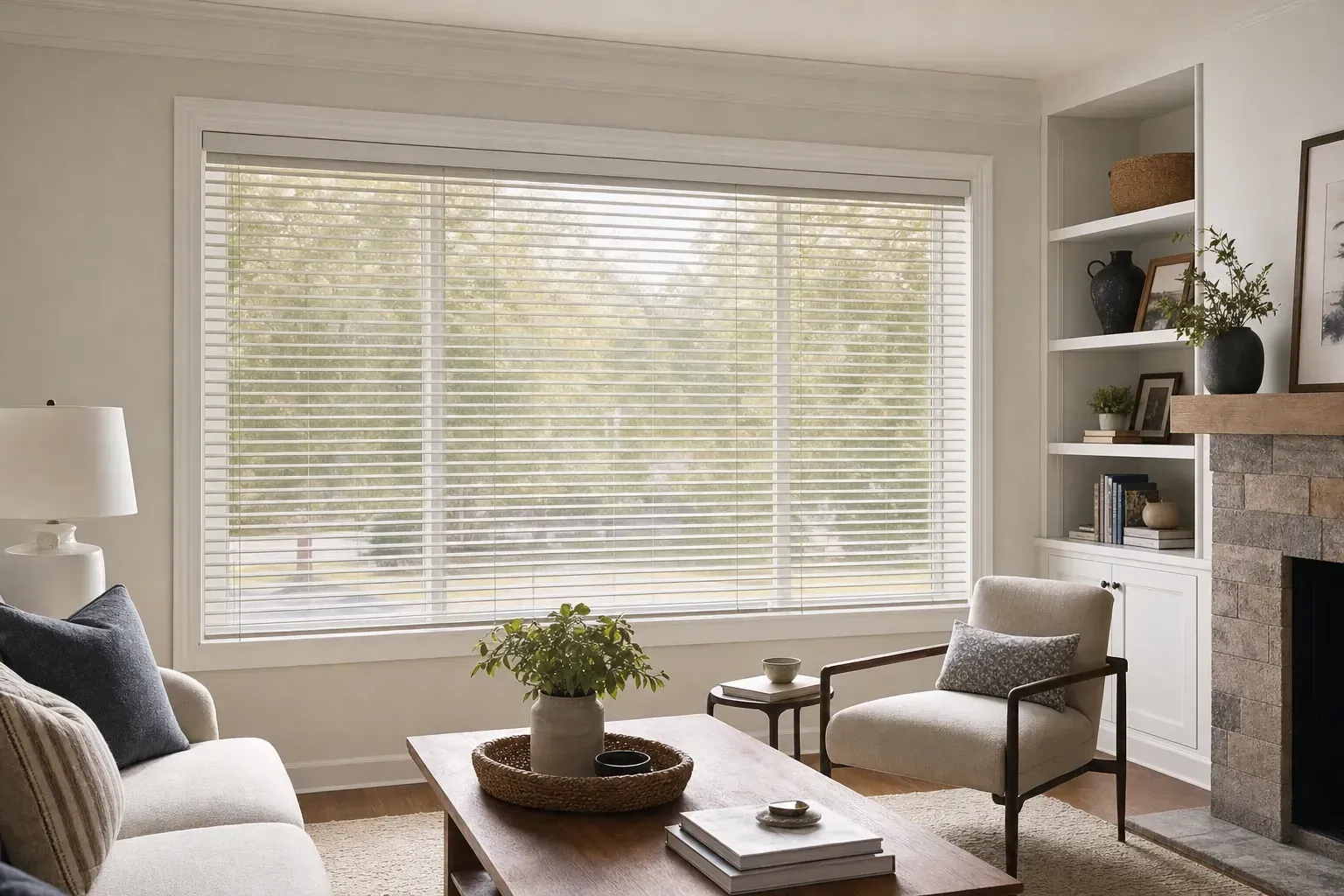
Privacy is not one setting. A treatment that feels private at noon can feel exposed after sunset, when interior lights turn the window into a bright frame. The best choice lets you manage both conditions without making the room feel shut down. For Atlanta homes, that usually means looking beyond a single product label. Street-facing rooms, bathrooms, bedrooms, kitchens, and high-rise living areas ask for different answers. The practical question is not simply, “What is the most private blind?” It is, “What should this window do during the day, after dark, and when the room is actually being lived in?” Start with the privacy problem, not the product Before choosing blinds or shades, stand outside the window at the time privacy matters most. For many homes, that is early evening, when the lights are on and the view from the street is clearest. Notice whether the concern is a direct line of sight, a nearby sidewalk, a neighbor’s second-story window, or a room that simply feels too exposed. Then separate privacy from darkness. A bedroom may need both. A front living room may need privacy while keeping the daylight soft. A kitchen may need glare control and a little screening without losing the view of the yard. Once those jobs are clear, it is easier to decide whether adjustable slats, fabric coverage, or layers will serve the room best. Daytime privacy: Can people see in while the room still needs natural light? Nighttime privacy: Does the treatment cover the opening when interior lights are on? Light control: Do you need to redirect glare, dim the room, or make it genuinely dark? Window fit: Will the treatment clear trim, handles, furniture, and nearby doors?