
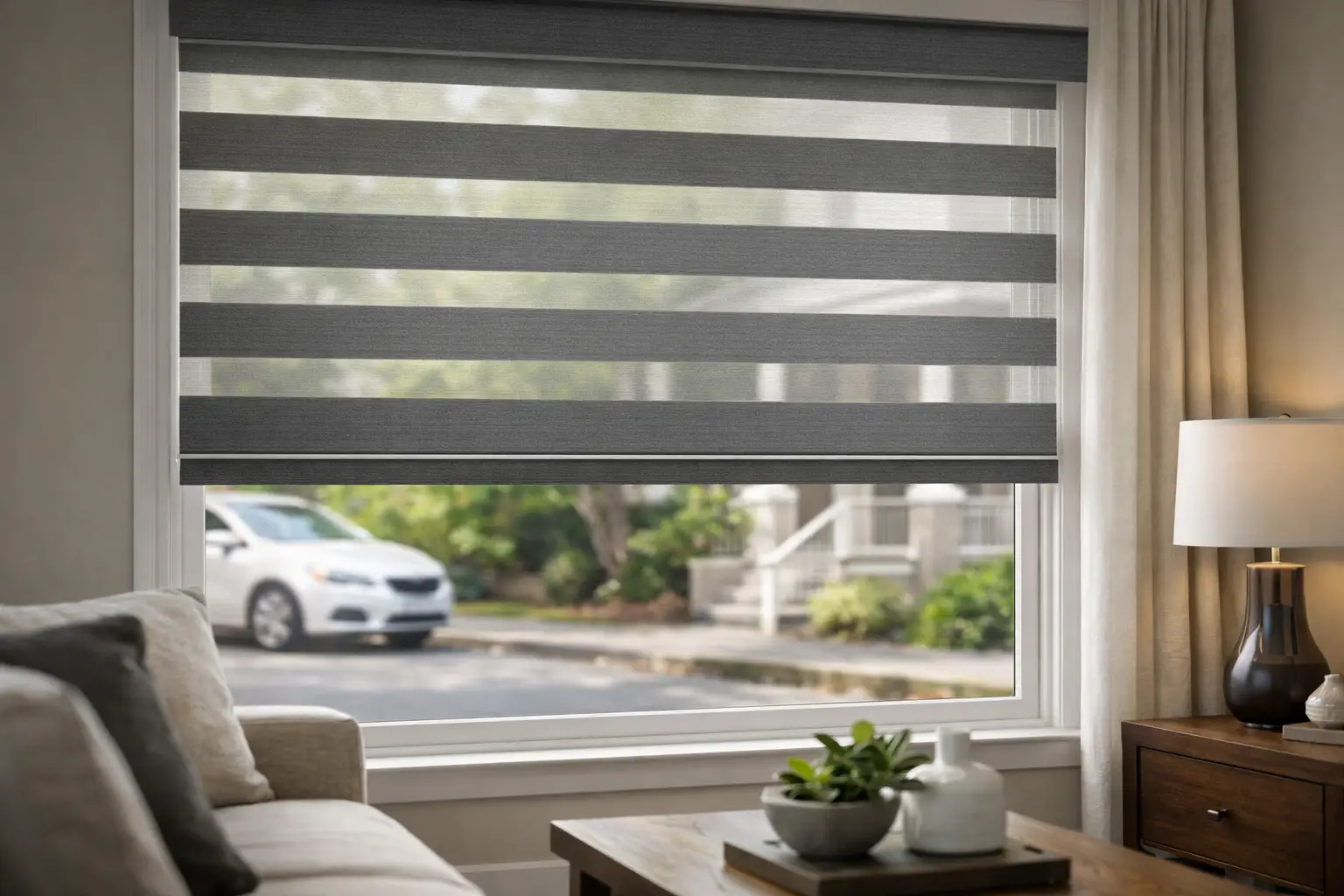
The wrong window treatment can make a front room feel exposed all day and closed off all evening. A smart guide to privacy shades for street facing windows starts with one simple goal: protect your home from outside views without sacrificing the natural light that makes the space feel inviting.
Street-facing windows ask more of a shade than most people realize. They need to soften direct visibility from the sidewalk or road, support the look of the room from both inside and outside, and still work with the way you actually live. In a living room, that may mean preserving daylight while reducing glare. In a front bedroom, it may mean stronger privacy in the evening. In a dining room, the priority may be a refined finish that feels intentional from the curb.
What street-facing windows need from a shade
Privacy is not a one-size-fits-all feature. During the day, many fabrics and woven materials can obscure views into your home while still letting in filtered light. At night, that changes. Once interior lights are on, a shade that looked private at noon may become more transparent than expected.
That is why the best solution usually balances three factors: privacy level, light quality, and visual style. If you choose based on privacy alone, the room can end up feeling heavy or dim. If you choose based only on looks, you may still feel on display after sunset. The right shade should solve the practical issue while making the room feel more finished.
A guide to privacy shades for street facing windows by room and need
The best shade for your front-facing windows depends on how the room is used and how much visibility the window gets from outside. A large picture window facing a busy street needs a different approach than a small front office window set back from the road.
Solar shades for daytime privacy and clean lines
Solar shades are often a strong choice for homeowners who want a modern, tailored look. They reduce glare, protect interiors from harsh sun, and preserve a connection to the outdoors. In daytime conditions, they can offer useful privacy while still allowing a view out, depending on the openness factor.
The trade-off is nighttime privacy. If your main concern is people seeing in after dark, solar shades alone may not be enough. They are excellent in living spaces where daytime comfort matters most, but they often work best when paired with drapery panels for added evening coverage and a more layered design.
Roller shades for a simple, versatile solution
Roller shades are one of the most adaptable options for street-facing windows because they come in a wide range of fabrics, from light-filtering to room-darkening. A light-filtering roller shade can soften visibility and create a calm glow in the room. A more opaque fabric increases privacy and gives the window a clean, architectural appearance.
This is often the right fit for homeowners who want a streamlined look that does not compete with the rest of the room. The key is choosing the right fabric opacity. Too sheer, and privacy suffers. Too opaque, and the front room can lose some of its warmth during the day.
Roman shades for softness and polish
Roman shades bring more decorative presence than a flat roller or solar shade. They add folds, texture, and a custom feel that suits formal living rooms, dining rooms, and front-facing bedrooms. If your goal is privacy with a more elevated design statement, Roman shades are often the answer.
Fabric selection matters here. A lined Roman shade can provide excellent privacy and light control, while lighter fabrics create a softer effect. The benefit is that you do not have to choose between function and style. The consideration is stack height and fullness, especially if the window is not very tall or if preserving every bit of daylight matters.
Natural woven shades for texture and filtered light
Natural woven shades are popular for homeowners who want warmth and character. They bring an organic layer to a room and can make front windows feel less stark. Depending on the weave, they may provide gentle daytime privacy while allowing beautifully diffused light.
But this category is very much an it-depends choice. Some woven materials are more open than they appear, which can limit privacy, especially at night. A privacy or blackout liner can solve that issue, but it also changes the light quality and overall effect. If you love the texture, customization is what makes this option truly work.
Cellular shades for privacy and energy efficiency
Cellular shades are often chosen for their insulation benefits, but they can also be a strong privacy solution for street-facing windows. Their soft structure helps diffuse light, and they are available in fabrics that offer substantial coverage.
They make particular sense in rooms where comfort matters as much as appearance, such as front bedrooms, nurseries, or street-level sitting rooms that get intense sun. From a style standpoint, they are usually more understated than Roman or woven shades, so they appeal most to homeowners who want a clean, practical finish.
Daytime privacy versus nighttime privacy
This is where many homeowners get frustrated. A shade may perform beautifully during the day and still leave the room exposed after dark. If your front windows are clearly visible from the street, true privacy often requires a layered approach.
A light-filtering shade can handle daytime glare and soften the room, while drapery panels add privacy and visual depth at night. This pairing also gives you more control over the room throughout the day. You can keep the space bright when you want it and create more coverage in the evening without making the window feel overly treated.
Motorization can make this even easier. For busy households, scheduled shades that lower automatically at dusk are not just a luxury feature. They solve a real privacy problem in a way that feels effortless.
Choosing privacy shades that still look beautiful from the curb
Front-facing windows affect your interior and your exterior at the same time. From inside, the shade needs to suit your furnishings, wall color, and overall style. From outside, it should look orderly and consistent, especially on the front elevation of the home.
That is one reason custom shades make such a difference. The right proportions, fabric weight, and finished details help the windows look intentional rather than improvised. This matters even more in homes with multiple front windows, where mismatched treatments can distract from an otherwise polished exterior.
Neutral tones are often the safest choice for street-facing windows because they read cleanly from outside and support a wide range of interior palettes. That said, subtle texture can be just as valuable as color. Linen-look fabrics, tailored woven materials, and softly structured Romans can add depth without overwhelming the room.
When custom matters most
A guide to privacy shades for street facing windows is ultimately about fit, not just product category. Two homes can have the same style of front window and need very different solutions based on sun exposure, distance from the street, ceiling height, and the homeowner's tolerance for light and visibility.
Custom design becomes especially valuable when the window is oversized, layered with trim, or central to the room's layout. It also matters when you want motorization, specialty fabric performance, or a more tailored result that complements the rest of the home. Professional measuring and installation are not minor details here. They affect how private the shade feels, how clean it looks, and how well it operates over time.
For homeowners in Atlanta, where bright sun and heat can be part of daily life, street-facing shades often need to do double duty. They should increase privacy, yes, but they should also help manage glare and protect the comfort of the room. That is where a more thoughtful, design-led approach pays off.
How to make the right choice without second-guessing it
If you are choosing shades for front windows, start by asking what bothers you most right now. Is it the feeling that passersby can see in? Is it the glare on your floors and furniture? Is it that the room looks unfinished from the street? The answer usually points you toward the right style and fabric.
From there, think about how much daylight you want to keep, whether you need nighttime privacy, and how decorative the treatment should feel. A minimalist room may call for clean roller shades. A more layered interior may feel better with Roman shades and side panels. If convenience is part of the goal, motorization is worth serious consideration.
The best privacy shade is not the one with the strongest blackout effect. It is the one that makes your front room feel comfortable, elegant, and easy to live in every day. When your windows give you privacy without making the space feel shut down, the whole room works better.