
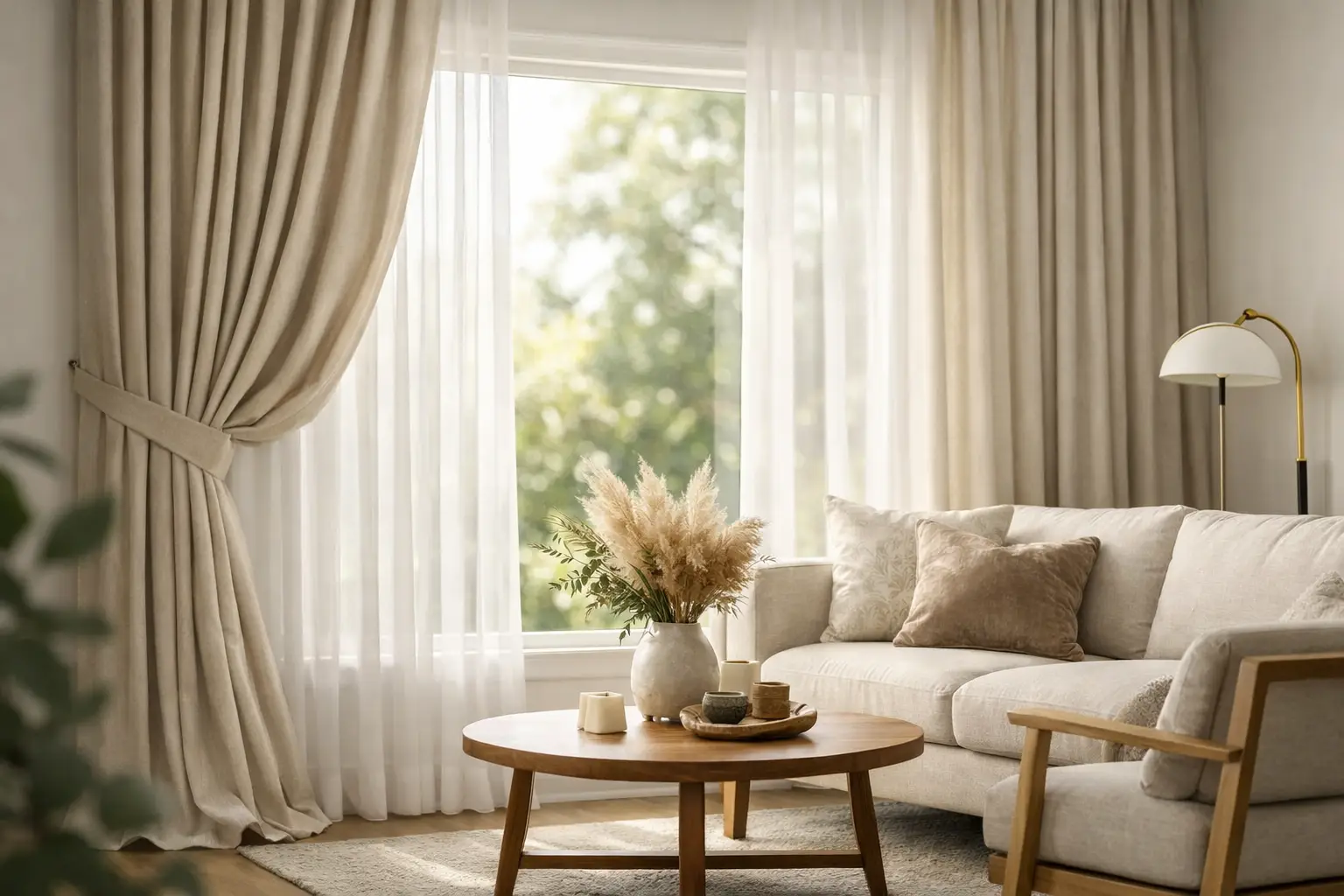
The living room usually tells the truth about a home. It is where morning light lands, where guests gather, where family time actually happens, and where every design choice has to work a little harder. That is exactly why custom drapery for living room spaces can make such a dramatic difference. When the scale, fabric, lining, and hardware are chosen for your windows and your lifestyle, the room feels more finished, more comfortable, and far more intentional.
Off-the-shelf panels can serve a purpose, but they rarely solve the full picture. A living room often needs beauty, privacy, light control, insulation, and proportion all at once. Custom drapery is what allows those needs to come together without making the room feel overdesigned or overly formal.
Why custom drapery for living room spaces stands out
The biggest difference is fit. Custom drapery is made for your exact window dimensions, ceiling height, wall space, and design goals. That means the panels can be hung higher, stacked properly when open, and fall at the right length instead of hovering awkwardly above the floor or puddling when they should not.
It also changes how the room feels. Drapery brings softness to spaces that are dominated by hard surfaces like wood floors, painted walls, glass, and stone. In a living room, that softness matters. It helps the room feel layered rather than flat, especially when furniture and architecture are clean-lined.
There is also a practical advantage. The right drapery can filter glare on screens, add privacy without making the room dark, and help moderate heat gain near large windows. If your living room gets strong afternoon sun, fabric choice and lining become more than decorative details. They become part of how the room functions every day.
Start with how you want the room to feel
Before choosing a fabric or pleat style, it helps to decide what role the drapery should play. Some homeowners want the drapery to frame the room quietly, almost like tailored architecture. Others want it to add softness, movement, and a stronger decorative statement.
Neither approach is better. It depends on the room. If your living room already has bold wallpaper, patterned upholstery, or a statement rug, a quieter drapery fabric often creates balance. If the room feels visually spare, drapery is a smart place to introduce depth through texture, tone, or subtle pattern.
This is where custom design guidance matters. The best result is rarely about picking the prettiest fabric sample on its own. It is about choosing a material that works with your paint color, trim, furnishings, natural light, and how formal or relaxed you want the room to feel.
Fabric choices shape the final look
Fabric is what people notice first, even if they cannot name why the drapery looks right. Linen blends create an easy, airy look that suits casual and transitional interiors. Velvet adds weight and richness, which can be beautiful in a larger room or a space that needs visual warmth. Textured solids are often the safest way to add interest without overwhelming the room.
Cotton blends tend to be versatile, while performance fabrics can be especially useful in homes with children, pets, or high-use living spaces. Sheer drapery creates softness and filtered light, but it will not provide much privacy at night on its own. Heavier fabrics offer more coverage and presence, though they can feel too dense if the room is small or already dark.
The trade-off is simple. Lighter fabrics feel more relaxed and bright, while heavier fabrics feel more tailored and substantial. The right answer depends on your architecture, your furniture, and how much sun the room receives.
Length, fullness, and hardware matter more than most people expect
One reason custom drapery looks more elevated is proportion. Small changes in placement can make a living room look taller, wider, and better balanced. Hanging panels higher than the window frame often draws the eye upward and gives the room more presence. Extending the rod beyond the window can also help the glass feel larger and allow more natural light when the panels are open.
Length matters just as much. In most living rooms, drapery that lightly touches the floor creates a clean, polished finish. A slight break can work in more traditional settings, while a puddled look is usually best reserved for lower-traffic rooms where drama matters more than easy maintenance.
Fullness is another detail that changes everything. Panels that are too narrow look flat and unfinished, even in a beautiful fabric. Generous fullness gives drapery its shape and movement. It is one of the clearest signs that a window treatment was designed thoughtfully rather than simply purchased.
Hardware should support the room, not distract from it. A slim metal rod can feel modern and tailored. A warmer finish can tie into lighting, furniture legs, or door hardware. The best choice is usually the one that feels intentional with the rest of the room rather than treated as an afterthought.
Choosing custom drapery for living room light and privacy
Living rooms have different privacy needs than bedrooms, but that does not mean privacy is not important. Street-facing windows, closely spaced neighboring homes, and large expanses of glass often need a more strategic approach.
That is where lining and layering come in. A lined drapery panel has a more substantial look and better light control. Blackout lining is not always necessary in a living room, but privacy lining or room-darkening lining can be useful if the space gets intense sun or glare. For homeowners who want softness during the day and privacy at night, pairing drapery with custom shades often creates the most flexible result.
This layered approach is especially effective in open-concept homes. Shades can handle the daily function of privacy and light management, while drapery completes the room visually. You get a finished design and practical control without asking one product to do everything.
Motorization is not just about convenience
For many homeowners, automated window treatments sound like a luxury until they live with them. In a living room with tall windows, hard-to-reach areas, or strong daily sun exposure, motorization can make the room easier to manage and more comfortable throughout the day.
It also protects the design investment inside the room. Furniture, rugs, wood flooring, and artwork can all be affected by prolonged direct sunlight. Automated shades paired with custom drapery allow you to soften the room and control UV exposure without sacrificing style.
This is especially appealing for busy households and for homeowners who want a more refined smart-home experience. It is less about novelty and more about making a beautiful room function beautifully too.
When custom is worth it
Not every room needs every upgrade. If your living room has standard-size windows, minimal privacy concerns, and a very casual design plan, ready-made panels may be enough for a temporary refresh. But when the room has tall ceilings, wide windows, unusual proportions, layered lighting needs, or a clear design vision, custom tends to pay off.
It also pays off when you want confidence in the final result. Measuring, selecting materials, coordinating hardware, and installing everything correctly is where many window projects go wrong. Professional guidance removes much of that guesswork. Instead of hoping the panels look right once they arrive, you are making choices based on your actual space.
That service is often what homeowners value most. A well-designed window treatment is not just about buying fabric. It is about solving the room.
A more polished living room starts at the window
The best living rooms feel effortless, but they are usually the result of careful decisions. Custom drapery adds that finishing layer that makes the furniture, architecture, and light feel connected. It can soften a modern space, sharpen a traditional one, and bring comfort to both.
If you are planning a living room update, start with the windows earlier than you think. The right drapery does not simply decorate the room. It changes how the room lives. For homeowners who want tailored guidance from concept through installation, Lionheart Design Atlanta offers a design-led approach that makes the process feel clear, elevated, and worth doing well.
A room you use every day deserves more than a close-enough solution.